
Introduction to Deriv Lookbacks Trading
In the world of online trading, innovation often determines the difference between a mediocre experience and a highly profitable one. Deriv, a pioneer in the brokerage space for over two decades, has introduced several unique financial instruments that differentiate it from traditional FX brokers. Among these, Deriv Lookbacks stand out as a revolutionary way to trade volatility. Unlike standard binary options where you predict a direction, or CFDs where you manage stop-losses, Lookbacks allow traders to earn a payout based on the maximum or minimum price reached during a contract’s duration.
The primary appeal of Lookbacks is the removal of ‘entry timing’ anxiety. Have you ever entered a trade, only to see it go higher after your contract expired? Or perhaps you missed the ‘perfect’ exit? Lookbacks address these frustrations by calculating your profit based on the price extremes of the market during the period you are active. In this deep-dive guide, we will explore how Deriv Lookbacks work, the different types available, and the strategies you can use to master them.
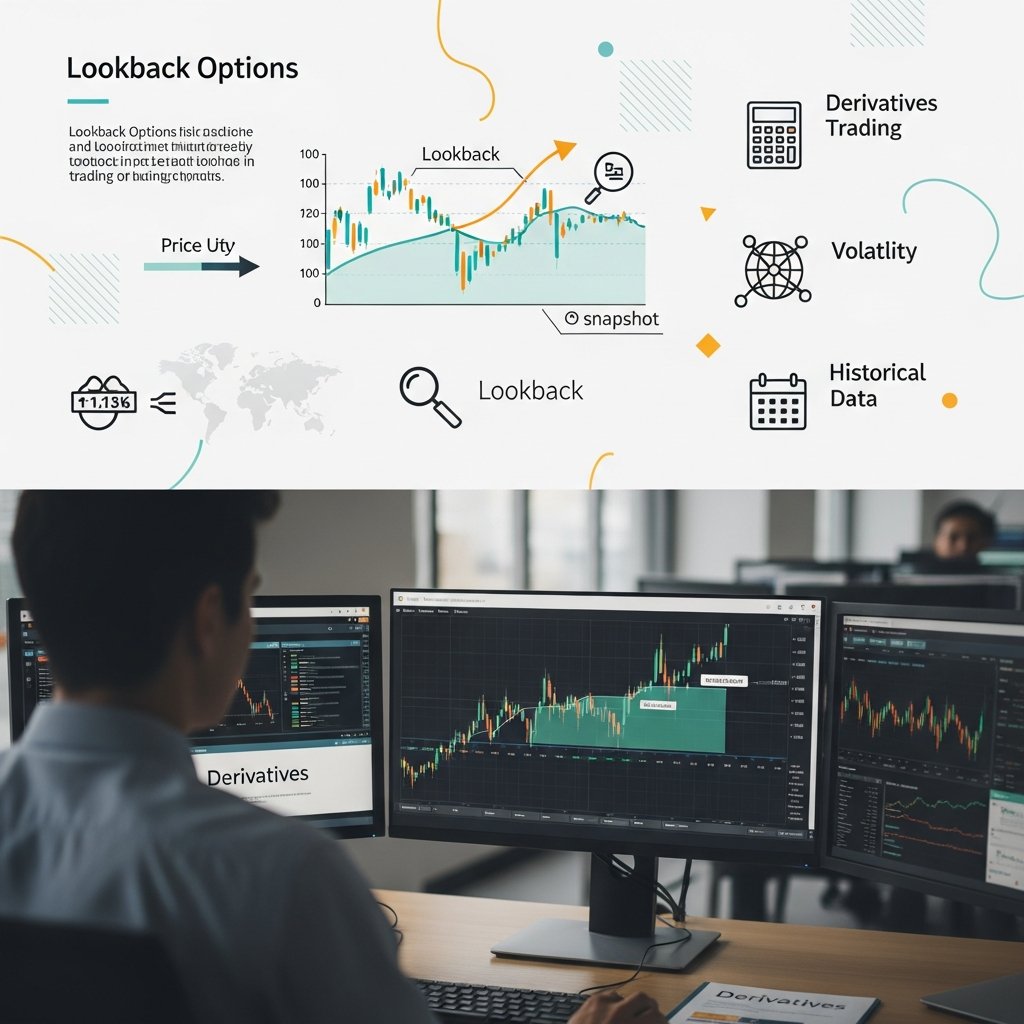
Table of Contents
- What are Deriv Lookbacks?
- How Lookbacks Work: The Mechanics
- The Three Types of Deriv Lookbacks
- Why Trade Lookbacks on Synthetic Indices?
- Advanced Strategies for Lookback Trading
- Risk Management and Best Practices
- Frequently Asked Questions (FAQ)
- Conclusion
What are Deriv Lookbacks?
Deriv Lookbacks are a type of exotic option where the payout is not fixed at the start of the trade. Instead, the payout is calculated at the end of the contract based on the price action that occurred during the trade’s lifetime. Specifically, the payout depends on the high, low, and close prices of the market during the contract period.
This instrument is particularly popular on Deriv’s Synthetic Indices, such as the Volatility 100 (1s) Index or the Volatility 10 Index. Because these indices are cryptographically generated to mimic real-world market volatility, they provide the constant price movement necessary for Lookback contracts to be profitable. Unlike traditional options, there is no ‘Strike Price’ to worry about at the moment of entry; your potential for profit begins the moment the contract starts.
How Lookbacks Work: The Mechanics
To understand Lookbacks, you must understand three key price points:
- The High (H): The highest price the market reached during the duration of your contract.
- The Low (L): The lowest price the market reached during the duration of your contract.
- The Close (C): The price of the market when the contract expires.
When you purchase a Lookback contract, you pay a ‘Stake.’ Your profit is then calculated by multiplying a specific price differential by a ‘Multiplier’ chosen at the start. It is important to note that you do not lose more than your initial stake, making this a limited-risk, variable-reward instrument.
The Multiplier Effect
On the Deriv platform, you will see a ‘Multiplier’ setting. This value determines how much you earn for every unit of price movement. A higher multiplier increases your potential payout but also increases the initial cost (premium) of the contract. Finding the balance between stake size and multiplier is the key to sustainable Lookback trading.
The Three Types of Deriv Lookbacks
Deriv offers three distinct variations of Lookback contracts. Each caters to a different market outlook (bullish, bearish, or range-bound).
1. High-Close (High minus Close)
In a High-Close contract, your payout is calculated based on the difference between the High reached during the contract and the Close at the end.
Formula: Payout = Multiplier × (High – Close)
This contract is ideal when you expect the market to spike significantly but then retraces slightly before the end of the period. You are essentially betting that the market will reach a peak much higher than where it eventually finishes.
2. Close-Low (Close minus Low)
A Close-Low contract rewards you for the difference between the Closing Price and the Lowest Price reached during the session.
Formula: Payout = Multiplier × (Close – Low)
This is a bullish-leaning contract. You want the market to dip low (to establish a low floor) and then rally strongly to close as high as possible. The wider the gap between the ‘dip’ and the ‘finish,’ the more you earn.
3. High-Low (High minus Low)
The High-Low is arguably the most popular Lookback type. It calculates the payout based on the total range of the market (the difference between the highest and lowest points) during the contract, regardless of where the market closes.
Formula: Payout = Multiplier × (High – Low)
This is a pure volatility play. You don’t care where the market starts or ends; you only care that it moves a lot in both or either direction. As long as there is a wide distance between the peak and the trough, you win.

Summary Table of Lookback Types
| Type | Payout Formula | Best Market Condition |
|---|---|---|
| High-Close | Multiplier × (High – Close) | Sharp spikes followed by retracement |
| Close-Low | Multiplier × (Close – Low) | Sharp dips followed by a strong recovery |
| High-Low | Multiplier × (High – Low) | High overall volatility/Wide range |
Why Trade Lookbacks on Synthetic Indices?
While some brokers offer exotic options on forex, Deriv’s Synthetic Indices are uniquely suited for Lookbacks for several reasons:
- 24/7 Availability: Synthetic indices do not follow bank holidays or weekend closures. You can trade Lookbacks on a Sunday night just as easily as a Tuesday morning.
- Consistent Volatility: Markets like the ‘Volatility 100 Index’ are designed to maintain a specific level of price variance. This makes it easier to predict potential ‘High-Low’ ranges compared to traditional currencies which can go ‘flat’ during the Asian session.
- No External Manipulation: Because these indices are not affected by news events or interest rate hikes, your technical analysis remains pure and unaffected by ‘black swan’ fundamental events.
Advanced Strategies for Lookback Trading
Trading Lookbacks is not about guessing direction; it is about guessing intensity. Here are three strategies to improve your win rate:
1. The ATR Expansion Strategy
The Average True Range (ATR) is the best friend of a Lookback trader. Before entering a ‘High-Low’ contract, look at the ATR over the last 14 periods. If the ATR is expanding, it means the price ranges are getting wider. Entering a High-Low Lookback during an ATR expansion phase maximizes the probability of a large ‘High minus Low’ spread.
2. The ‘V-Shape’ Recovery Play (Close-Low)
Use the Relative Strength Index (RSI) to identify oversold conditions on a 1-minute or 5-minute chart. When the RSI dips below 30 and starts to curl up, purchase a ‘Close-Low’ contract. The dip creates the ‘Low,’ and the subsequent bounce creates a higher ‘Close,’ widening your profit margin.
3. The Bollinger Band Squeeze
Bollinger Bands represent market volatility. When the bands ‘squeeze’ or tighten, it indicates a period of low volatility that is usually followed by a massive breakout. Buying a High-Low contract right at the beginning of a Bollinger Band breakout allows you to capture the entire expansion of the range.
Risk Management and Best Practices
Because the payout of a Lookback is variable, risk management is slightly different than in CFD trading. Consider these rules:
- Stake Only What You Can Lose: In Lookbacks, your stake is your maximum risk. Never put more than 2-3% of your account balance into a single Lookback contract.
- Mind the Duration: Shorter durations (e.g., 1 minute to 5 minutes) require much higher volatility to be profitable. Longer durations (e.g., 1 hour) give the market more time to establish a wide High-Low range.
- Test on Demo: Deriv provides a risk-free demo account. Use it to understand how the Multiplier affects your payout relative to the movement of the Volatility Indices.
Frequently Asked Questions (FAQ)
Can I lose more than my stake in Deriv Lookbacks?
No. One of the safest features of Deriv Lookbacks is that your risk is strictly limited to the initial stake you pay to open the contract.
What is the minimum duration for a Lookback contract?
Typically, Deriv allows Lookback contracts to last from as little as 1 minute up to several hours, depending on the specific asset being traded.
Are Lookbacks available on Forex pairs?
On the Deriv platform, Lookbacks are primarily available on Synthetic Indices. Check the ‘DTrader’ platform for the most current list of available assets for this trade type.
Which Lookback type is the most profitable?
The ‘High-Low’ contract often yields the highest payouts because it captures the entire trading range, but it also typically requires a higher stake/premium to enter.
Conclusion
Deriv Lookbacks offer a refreshing alternative to traditional directional trading. By focusing on price extremes rather than just the entry and exit points, they provide a unique way to capitalize on market volatility. Whether you are using the ‘High-Low’ to capture wide swings or the ‘Close-Low’ to trade market recoveries, these instruments empower you to profit from the ‘path’ the price takes, not just its destination.
As with all financial instruments, success comes with practice. Start by analyzing the volatility of your favorite synthetic indices, apply technical indicators like ATR or Bollinger Bands, and use the Deriv demo account to refine your strategy. With the right approach, Lookbacks can become a powerful tool in your trading arsenal.