
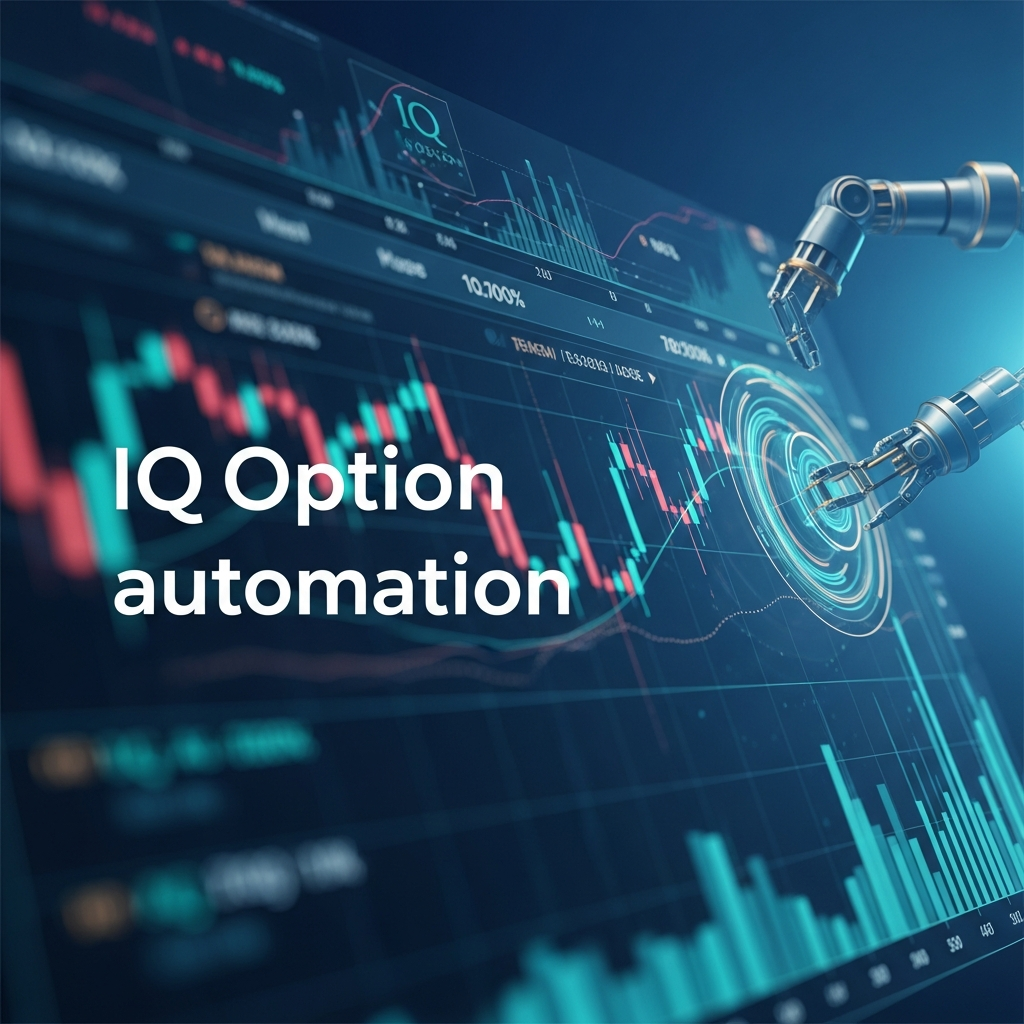
The trading landscape has undergone a seismic shift over the last decade. Gone are the days when trading was solely the domain of individuals staring at charts for twelve hours a day. Today, IQ Option automation is empowering retail traders to compete with institutional-grade technology. By leveraging algorithmic systems, traders can execute orders at lightning speeds, remove emotional bias, and maintain a consistent presence in the market 24/7.
Whether you are a seasoned developer or a novice investor, understanding how to automate your IQ Option workflow is critical for staying relevant in the modern financial ecosystem. This guide dives deep into the technicalities, strategies, and risks associated with automated trading on one of the world’s most popular platforms.
What Exactly is IQ Option Automation?
IQ Option automation refers to the use of software, scripts, and algorithms to execute trades on the IQ Option platform without direct human intervention. This process involves a set of predefined rules—based on price action, technical indicators, or fundamental data—that trigger buy or sell orders automatically.
Automation can range from simple “if-then” logic (e.g., “if the RSI is below 30, buy”) to complex machine learning models that analyze vast datasets to predict price movements. In the context of IQ Option, this usually involves interacting with their proprietary trading engine through an Application Programming Interface (API).

The Mechanics Behind the Machine
To understand IQ Option automation, one must understand the interaction between the client-side (your bot) and the server-side (IQ Option). The process typically follows this workflow:
- Data Acquisition: The bot requests real-time market data (candles, ticks, or order books) from the broker.
- Analysis: The algorithm processes this data based on its coded strategy.
- Signal Generation: The system determines if entry or exit criteria are met.
- Order Execution: The bot sends a request to the broker to open or close a position.
- Monitoring: The system manages the open trade, adjusting stop-losses or take-profits as required.
Why Traders Are Moving Toward Automation
1. Elimination of Emotional Bias
Human psychology is the greatest enemy of the trader. Fear and greed lead to revenge trading or holding losing positions for too long. An automated script follows the plan exactly, regardless of market sentiment.
2. Speed and Efficiency
A bot can scan hundreds of assets across multiple timeframes simultaneously—something impossible for a human. Furthermore, it can execute an order in milliseconds, capturing price points that a manual trader would miss.
3. Backtesting Capabilities
Before risking real capital, automation allows you to run your strategy against years of historical data. This provides a statistical baseline for your strategy’s expected performance, drawdowns, and win rates.
Mastering the IQ Option API
The API is the bridge that allows your software to “talk” to the IQ Option servers. While IQ Option does not provide a publicly documented REST API for retail traders in the same way some crypto exchanges do, the community has developed several wrappers, primarily in Python, that interface with the platform’s WebSockets.
Using these libraries, you can perform functions such as:
- Authenticating your account securely.
- Retrieving real-time asset prices.
- Placing Binary, Digital, or Forex orders.
- Checking account balances and trade history.
Building Your First Bot with Python
Python has become the industry standard for financial automation due to its readability and the strength of its data science libraries like Pandas, NumPy, and Scikit-learn. To start automating IQ Option with Python, you generally use a library like iqoptionapi.
A basic script follows this logic:
# Connect to the API
from iqoptionapi.stable_api import IQ_Option
api = IQ_Option("email", "password")
api.connect()

# Get real-time data
while True:
    candles = api.get_candles("EURUSD", 60, 10, time.time())
    # Apply technical logic here
    if candles[-1]['close'] > candles[-1]['open']:
        api.buy_digital_spot("EURUSD", 10, "call", 1)
While this is a simplified example, it illustrates the power of programmatic execution. Modern bots incorporate multi-threading to handle multiple currency pairs at once.

Managing Risks in Algorithmic Trading
Automation does not guarantee profit. In fact, it can lead to rapid losses if not managed correctly. Effective IQ Option automation requires strict risk management protocols:
- Stop-Loss and Take-Profit: Hard-coding these levels ensures that a single market anomaly doesn’t wipe out your account.
- Position Sizing: Use a percentage of your balance rather than fixed amounts to account for account growth or decline.
- Circuit Breakers: Program your bot to stop trading if it hits a daily loss limit.
- Error Handling: Ensure your code can handle internet outages or API timeouts without leaving trades unmanaged.
Popular Automation Tools and Platforms
If you aren’t a programmer, there are still ways to automate your IQ Option activities:
- Third-Party Robots: Platforms like vfxAlert or MT2Trading allow users to connect MetaTrader 4/5 signals directly to IQ Option.
- Copy Trading: While not “automation” in the coding sense, copying high-performance traders automates the decision-making process.
- VPS (Virtual Private Servers): To ensure your bot runs 24/7 without interruption, most traders host their scripts on a VPS located close to the broker’s data centers to minimize latency.
Common Automated Strategies
Successful IQ Option automation usually relies on one of the following strategic frameworks:
Mean Reversion
The system assumes that prices will eventually return to their average. When the price deviates significantly from a moving average or Bollinger Band, the bot enters a trade in the opposite direction.
Trend Following
This strategy utilizes indicators like the MACD or ADX to identify a strong market trend and enters trades in that direction. This is often more effective in volatile markets like Forex or Crypto.
Scalping
Bots excel at scalping—making dozens of trades a day for tiny profit margins. Since these trades last only minutes, the speed of automation is a massive advantage.
Frequently Asked Questions
Safety depends on the quality of your code and the security of your API keys. Always use two-factor authentication and never share your login credentials with untrusted third-party bot providers.
As of the current landscape, IQ Option allows the use of APIs for trading. However, they frequently update their security protocols to prevent abusive behavior (such as high-frequency spamming), so it is vital to stay updated on their latest terms.
Technically, you can start with the minimum deposit, but for automation, it’s recommended to have enough capital to withstand the natural variance (drawdown) of your strategy.
The Future of IQ Option Automation
The future lies in Artificial Intelligence and Machine Learning. We are moving toward a phase where bots will not just follow static rules but will adapt to changing market regimes in real-time. By integrating sentiment analysis from news feeds and social media, the next generation of IQ Option automation will be more intuitive and resilient than ever before.
In conclusion, IQ Option automation is a powerful tool that levels the playing field. However, it requires a blend of technical skill, strategic discipline, and constant monitoring. Start small, backtest rigorously, and always prioritize risk management over potential gains.