
The Clash of Trading Titans
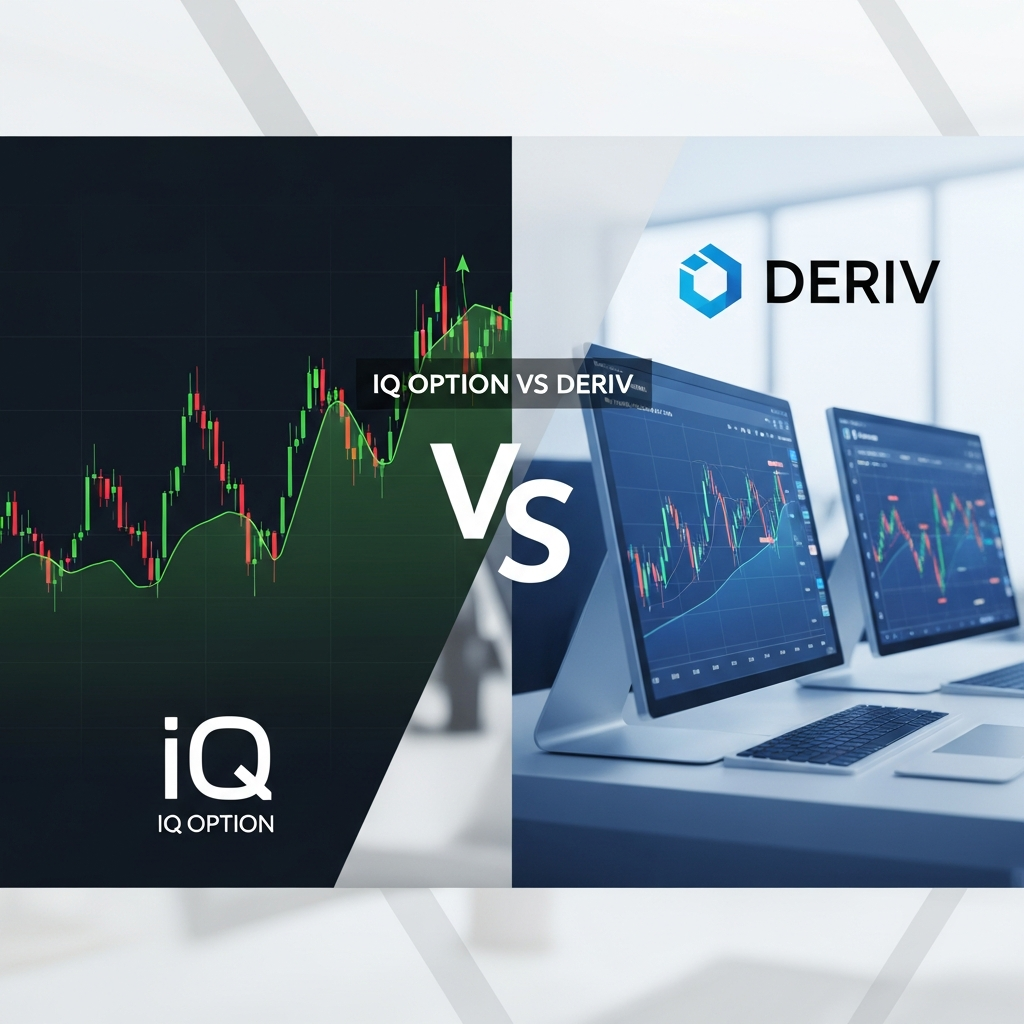
Choosing between IQ Option vs Deriv is like choosing between a high-end Tesla and a rugged, customizable off-road vehicle. Both will get you to your destination—financial market participation—but the ride feels fundamentally different. In the rapidly evolving world of online trading, these two platforms have emerged as the heavyweights, yet they cater to slightly different philosophies of speculation.
IQ Option has built its reputation on unparalleled aesthetics and a user interface that makes complex trading feel accessible. On the other hand, Deriv (the evolution of the legendary Binary.com) has leaned into technical versatility and a massive range of unique trade types that you simply won’t find elsewhere. Whether you are hunting for high-speed scalping opportunities or long-term forex trends, understanding the nuance between these two is the first step toward a profitable career.
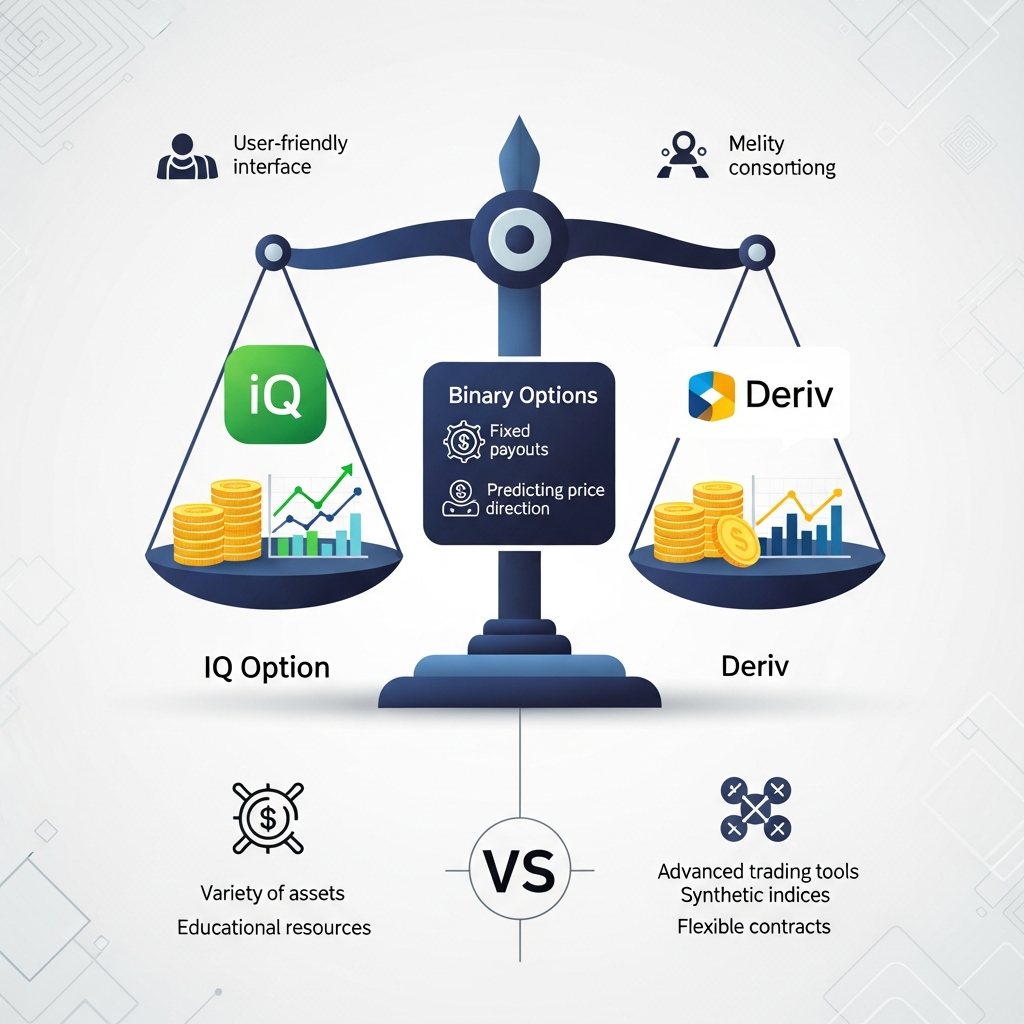
Visual Mastery vs. Functional Depth
When you first log into IQ Option, the first thing that hits you is the polish. The charts are fluid, the color palette is dark and professional, and the buttons are exactly where you expect them to be. It feels less like a financial tool and more like a high-performance gaming rig. For traders who rely on visual clarity and fast execution for binary options or quick stock trades, IQ Option’s proprietary platform is often the gold standard.
Deriv takes a different approach. Instead of forcing you into one platform, Deriv offers a suite of options. You have DTrader (the clean, modern web interface), SmartTrader (the legacy interface for old-school binary enthusiasts), and Deriv MT5 (DMT5) for those who want the heavy-duty power of MetaTrader. While it might feel slightly more fragmented at first, this modularity allows Deriv to grow with you as your skills evolve from simple ‘Up/Down’ trades to complex algorithmic strategies.
Assets: From Forex to Synthetic Indices
Let’s look at what you can actually trade. IQ Option offers a massive selection of Forex pairs, Stocks, Cryptocurrencies, and Commodities. Their focus is on real-world market movements. If Apple releases a new iPhone or the Fed raises interest rates, you see that volatility reflected directly on IQ Option’s charts. They excel in providing Digital and Binary Options on these real-world assets, often with returns reaching up to 95% on successful trades.
Deriv matches them on Forex and Commodities but introduces a game-changer: Synthetic Indices. These are markets that are NOT affected by real-world news or time zones. They are generated by a cryptographically secure audit-trail algorithm. This means you can trade a ‘Volatility 100 Index’ at 3 AM on a Sunday, and the market will be just as liquid and active as a Tuesday afternoon. For traders who work a 9-to-5 job, this 24/7 availability is a massive advantage for Deriv.
The Deriv Secret Weapon: Why Synthetics Matter
If you’ve ever been frustrated by a market closing just as you found a perfect setup, you’ll understand why Deriv has such a cult following. Their Synthetic Indices mimic real market behavior—volatility, trends, and crashes—but they run on a computer server. This removes the risk of ‘Black Swan’ events like political coups or sudden bank failures affecting your trade.
Furthermore, Deriv offers Multipliers. This is a unique trade type that combines the limited risk of an option with the profit potential of a leveraged spot trade. You can multiply your potential profit by up to 1000x, but your loss is strictly limited to your initial stake. It’s a sophisticated way to manage risk that IQ Option hasn’t quite replicated in the same way.
IQ Option’s Proprietary Edge
Where IQ Option fights back is in its technical analysis integration. Within the platform, you can overlay dozens of indicators—RSI, Bollinger Bands, Ichimoku Clouds—without the chart ever feeling cluttered. They also feature an integrated news feed and economic calendar directly in the sidebar. You never have to leave the platform to check why the EUR/USD is suddenly spiking.
IQ Option also hosts trading tournaments. These are competitive events where you pay a small entry fee and compete against other traders using a virtual balance. It’s a fantastic way to test your mettle and potentially win real cash prizes without risking your entire capital. This social, competitive element is largely absent from the more ‘utility-focused’ Deriv ecosystem.
Counting the Costs: Fees, Spreads, and Limits
Profitability isn’t just about winning trades; it’s about keeping what you earn. Below is a comparison of the typical cost structures for both brokers.
| Feature | IQ Option | Deriv |
|---|---|---|
| Min Deposit | $10 | $5 (Depending on method) |
| Min Trade | $1 | $0.35 – $1 |
| Forex Spreads | Competitive / Tight | Variable (MT5 focus) |
| Withdrawal Speed | 1-3 Days (Instant for E-wallets) | Typically under 24 hours |
| Inactivity Fee | $10/month after 90 days | None (unless specific conditions met) |
While IQ Option is very affordable, they can be slightly more aggressive with inactivity fees. Deriv is often praised for its extremely low barrier to entry, allowing trades as low as $0.35, which is perfect for those practicing money management with tiny accounts.
The Safety Net: Licensing and Trust
Never trade with a broker that doesn’t respect the rules. IQ Option is primarily regulated by CySEC (Cyprus Securities and Exchange Commission) for its European operations, which brings a high level of oversight and investor protection. For international traders, they operate under various global registrations.
Deriv has a long history, starting as Binary.com in 1999. They are regulated by the MFSA (Malta), LFSA (Labuan), and VFSC (Vanuatu). This multi-jurisdictional approach makes them one of the most transparent and long-standing brokers in the binary and synthetic space. Both brokers use segregated accounts, meaning your trading capital is kept separate from the company’s operational funds.
Choosing Your Winner: The Final Verdict
So, who wins the IQ Option vs Deriv battle? The answer depends on your trading DNA. If you are a trader who values user interface, social features, and high-quality visuals, IQ Option is almost impossible to beat. It is the perfect environment for someone who wants to trade major stocks and forex pairs with a sleek, modern feel.
However, if you are a technical specialist who wants to trade 24/7, use robots (Deriv Bot), or dive deep into the world of MetaTrader 5, Deriv is the superior choice. Their Synthetic Indices are a unique selling point that gives you freedom from the traditional market clock, making it the ultimate tool for the dedicated, round-the-clock speculator.
Pertanyaan Umum seputar iq option vs deriv
Which platform is better for beginners, IQ Option or Deriv?
IQ Option is generally considered more beginner-friendly due to its highly intuitive, visual interface. However, Deriv offers better educational resources for those wanting to learn professional platforms like MT5.
Can I trade on weekends with IQ Option and Deriv?
Yes. IQ Option offers OTC (Over-The-Counter) markets on weekends, while Deriv is famous for its Synthetic Indices which are available 24/7, regardless of global holidays.
What is the minimum deposit for IQ Option and Deriv?
IQ Option has a minimum deposit of $10. Deriv offers a lower entry point, with minimum deposits starting at just $5 depending on the payment method used.