

In the fast-paced world of financial markets, the emergence of the automated binary trading bot has revolutionized how retail traders approach binary options. Historically, binary trading required constant monitoring, sharp reflexes, and a deep emotional fortitude. Today, algorithmic solutions take the helm, executing trades with precision and speed that no human can replicate.
This comprehensive guide explores the mechanics, advantages, and risks of binary trading automation, providing you with the insights needed to navigate this high-stakes technological landscape.
What is an Automated Binary Trading Bot?
An automated binary trading bot is a software program designed to execute trades on behalf of a user. These programs interact with binary options brokers via APIs (Application Programming Interfaces) to open and close positions based on a predefined set of rules or mathematical algorithms.
Unlike traditional trading, where a human decides to enter a ‘Call’ or ‘Put’ option, a bot analyzes market data—such as price action, volume, and technical indicators—to make instantaneous decisions. The “binary” aspect refers to the outcome of the trade: a fixed profit or a total loss, depending on whether the asset price is above or below a specific strike price at the time of expiration.
How These Bots Function
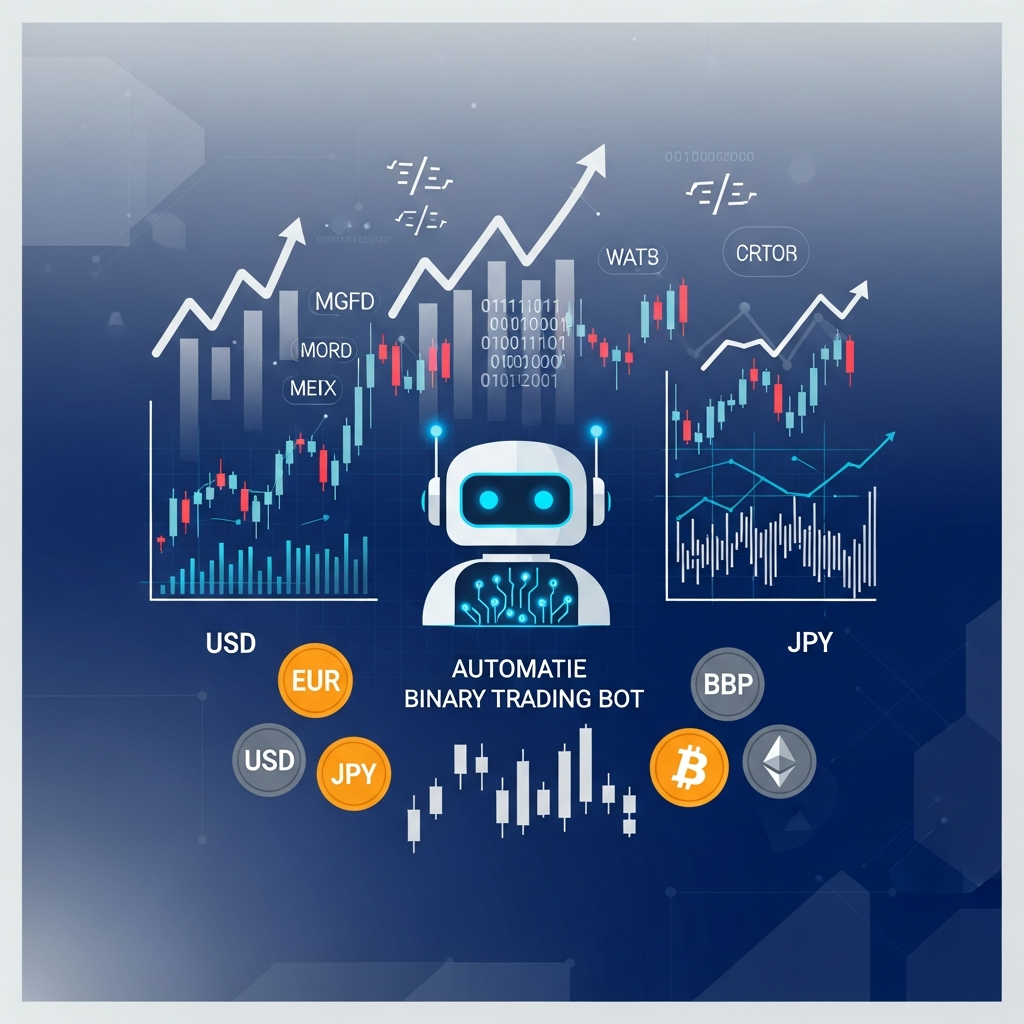
The architecture of a sophisticated automated binary trading bot consists of three primary layers: data ingestion, signal generation, and execution. Understanding these layers is crucial for any trader looking to deploy capital via automation.
1. Data Ingestion
The bot continuously pulls real-time market data from the broker or third-party liquidity providers. This data includes current prices, historical candles, and sometimes even news sentiment analysis. High-frequency bots process this information in milliseconds, seeking patterns that suggest a high-probability trade.
2. Signal Generation
This is the ‘brain’ of the bot. It applies technical indicators such as the Relative Strength Index (RSI), Moving Average Convergence Divergence (MACD), or Bollinger Bands to the incoming data. For instance, a bot might be programmed to generate a ‘Call’ signal if the price touches the lower Bollinger Band while the RSI is below 30 (indicating oversold conditions).
3. Execution
Once a signal is confirmed, the bot sends an order to the broker’s server. Because it is automated, the execution is nearly instantaneous, minimizing ‘slippage’—the difference between the expected price and the actual price at which the trade is filled.
Core Benefits of Automation
The primary reason traders flock to an automated binary trading bot is the removal of the human element. Trading is notoriously psychological, and even the most seasoned pros can fall victim to greed, fear, or revenge trading.
- Elimination of Emotion: Bots do not feel fear when a trade goes against them, nor do they feel overconfident after a win. They follow the script with 100% discipline.
- 24/7 Market Coverage: The global financial markets never sleep, but humans do. A bot can monitor the EUR/USD or Bitcoin markets throughout the night, capturing opportunities during Asian, London, and New York sessions.
- Backtesting Capabilities: Before risking real money, traders can run their bot’s strategy against historical data. This process, known as backtesting, allows you to see how the algorithm would have performed in the past, providing a statistical edge.
- Speed and Accuracy: A bot can scan dozens of assets and hundreds of indicators simultaneously—a feat impossible for a human brain.

The Risks Involved
While the prospect of ‘passive income’ through an automated binary trading bot is alluring, the risks are substantial. It is a mathematical certainty that no bot is 100% accurate.
Market Volatility
Binary options are highly sensitive to market volatility. High-impact news events, such as NFP reports or central bank interest rate decisions, can cause erratic price swings that cause a bot’s logic to fail. If a bot is not programmed to halt during news events, it can incur a series of rapid losses.
The Prevalence of Scams
The binary options industry has been plagued by fraudulent software providers. Many websites promise “90% win rates” or “guaranteed riches” to lure beginners into depositing money with unregulated brokers. Always remember: if a bot’s performance sounds too good to be true, it likely is.
Technical Failures
Even the best algorithm can fail due to technical glitches. Server outages, internet connectivity issues, or API errors can result in missed trades or, worse, unintended positions being opened. Robust bot setups often require a VPS (Virtual Private Server) to ensure continuous operation.
Common Algorithmic Strategies
Successful bots typically rely on one of several proven mathematical frameworks. Here are the most common strategies coded into an automated binary trading bot:
1. Trend Following
The bot identifies a strong upward or downward trend using Moving Averages (e.g., the 50-period and 200-period). It only enters trades in the direction of the momentum. This is generally considered the safest approach in algorithmic trading.
2. The Martingale System
This is a controversial strategy where the bot doubles the trade amount after every loss. The idea is that one eventual win will recover all previous losses plus a profit. However, Martingale requires a significant capital base and can lead to a ‘blown account’ if a long losing streak occurs.
3. Mean Reversion
This strategy assumes that prices will eventually return to their average. When the price of an asset deviates significantly from its mean (calculated via indicators like Bollinger Bands), the bot bets on a reversal. This works best in ranging markets rather than trending ones.
How to Choose the Right Bot
If you are ready to venture into automated binary trading, you must vet your tools with extreme caution. Follow this checklist to ensure you are choosing a legitimate and effective bot:
- Transparency: Does the provider offer a real-time track record? Avoid bots that only show screenshots of winning trades.
- Customizability: Can you adjust the risk parameters? A good bot should allow you to set daily loss limits, maximum trade amounts, and specific asset filters.
- Broker Compatibility: Ensure the bot works with reputable, regulated brokers. Using a bot on a platform that refuses to process withdrawals is a waste of time.
- Demo Account Support: Never run a bot on a live account first. Use a demo environment for at least two weeks to observe the bot’s behavior in different market conditions.
- Community Reputation: Check independent forums and review sites. Look for feedback from long-term users rather than promotional affiliate reviews.
Frequently Asked Questions
Are automated binary trading bots legal?
Yes, using automated trading software is legal in most jurisdictions. However, the legality of binary options themselves varies by country (for example, they are restricted for retail traders in the UK and EU). Always check your local regulations.
Can I make money with a binary trading bot?
Success is possible, but it requires a combination of a good algorithm, proper capital management, and a deep understanding of market mechanics. Bots are tools, not magic money-making machines.
Do I need coding skills?
While many platforms offer “no-code” solutions, having basic knowledge of logic and technical analysis is vital for configuring the bot correctly.
Conclusion
The automated binary trading bot represents a powerful evolution in retail finance, offering speed and discipline that humans simply cannot match. However, the path to profitability is paved with technical challenges and the constant need for risk management. By understanding how these bots work, choosing transparent providers, and never risking more than you can afford to lose, you can leverage automation to potentially enhance your trading outcomes. Always stay educated and remain skeptical of unrealistic promises in the high-reward world of binary options.