
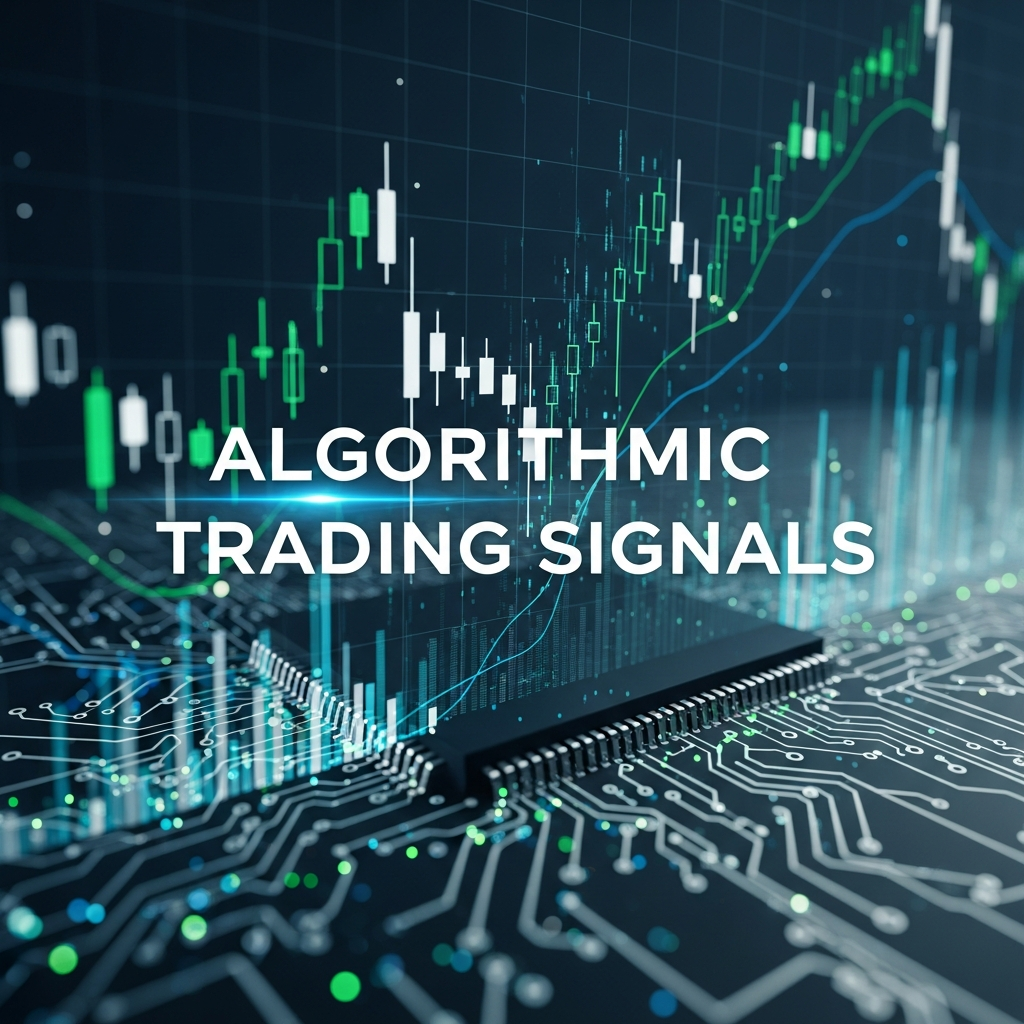
Introduction to the Revolution of Algorithmic Trading Signals
In the high-stakes world of modern finance, the speed of decision-making is no longer measured in minutes or seconds, but in microseconds. Algorithmic trading signals have transformed the landscape of the trading industry, shifting the power from the floor-shouting traders of the past to the quantitative analysts and high-speed servers of today. But what exactly are these signals, and why have they become the backbone of institutional and retail trading alike?
An algorithmic trading signal is essentially a ‘buy’ or ‘sell’ instruction generated by a computer program. These programs, or algorithms, scan vast amounts of market data—price, volume, time, and even social media sentiment—to identify patterns that match a specific strategy. Unlike a human, an algorithm never tires, never second-guesses its logic, and can execute trades across thousands of assets simultaneously.
What Are Algorithmic Trading Signals?
At its core, an algorithmic trading signal is a rule-based trigger. It is the output of a quantitative model designed to exploit a specific market inefficiency. In the traditional sense, a trader might look at a chart, see a ‘Head and Shoulders’ pattern, and decide to sell. In the algorithmic world, that same logic is written into code. The computer monitors the live feed; when the geometric conditions are met, it instantly flags a signal.
These signals can be delivered in two primary ways: Semi-automated, where the algorithm alerts the human trader who then decides whether to click ‘buy,’ and Fully-automated, where the signal is sent directly to an exchange via an API (Application Programming Interface) for immediate execution. The latter is often referred to as ‘black-box’ trading, where the speed of execution is the primary advantage.

How the Technology Works: From Data to Decision
The journey of a signal begins with data ingestion. Modern trading platforms ingest ‘Tick Data’—the most granular level of market activity. From here, the algorithm applies mathematical filters. This might include calculating the Moving Average, determining the Relative Strength Index (RSI), or measuring the rate of change in order book depth.
The Role of Big Data and Latency
To produce reliable signals, algorithms require clean, high-fidelity data. Institutional players often pay thousands of dollars for direct exchange feeds to minimize ‘latency’—the delay between a market event and the signal generation. Even a 10-millisecond delay can render a signal unprofitable in the competitive world of high-frequency trading (HFT).
The Logic Engine
The logic engine is the ‘brain’ of the operation. It uses ‘If-Then’ statements or complex machine learning models to process the data. For example: IF the 50-day Moving Average crosses above the 200-day Moving Average AND the volume is 20% above the 10-day average, THEN generate a Buy Signal.
Common Algorithmic Signal Strategies
Not all signals are created equal. Depending on the market environment, different mathematical approaches are used to find profitability.
Trend Following
This is the most common type of algorithmic signal. It doesn’t try to predict where the price will go but rather identifies a direction and ‘rides’ it. Indicators like MACD and channel breakouts are frequently used here. The signal persists as long as the trend remains intact.
Mean Reversion
Mean reversion signals are based on the mathematical theory that prices eventually return to their historical average. If a stock’s price deviates significantly from its mean (often measured by Bollinger Bands or Standard Deviation), the algorithm generates a signal to trade in the opposite direction, betting on a return to normalcy.
Statistical Arbitrage
Arbitrage signals look for price discrepancies between related assets. For example, if Gold is trading at $2000 in London and $2005 in New York, an algorithm will instantly signal a buy in London and a sell in New York to capture the $5 ‘risk-free’ profit. This requires immense speed and is dominated by institutional algorithms.
Benefits of Using Automated Signals
Why are traders abandoning manual charts for automated signals? The reasons are rooted in human psychology and mechanical efficiency.
- Elimination of Emotion: Humans are prone to fear and greed. An algorithm will never hold onto a losing trade out of ‘hope’ or exit a winning trade too early out of ‘panic.’ It follows the plan exactly.
- Backtesting: Before risking a single dollar, a signal strategy can be tested against 20 years of historical data. This allows traders to see how the signal would have performed during the 2008 crash or the 2020 pandemic.
- Consistency: An algorithm can monitor 500 stocks simultaneously, 24 hours a day. A human trader is limited by focus and fatigue.
- Execution Speed: Signals can be converted into orders in milliseconds, capturing price points that a human would miss while trying to manually type an order.
Risks and Challenges in Algorithmic Trading
While powerful, algorithmic trading signals are not a ‘get rich quick’ button. They come with a unique set of technical and market risks.
Over-Optimization (Curve Fitting)
A common trap for developers is creating a signal that works perfectly on historical data but fails in the real market. This is called curve-fitting. The algorithm becomes so tuned to specific past events that it cannot handle the randomness of future price action.
Systemic and Technical Risk
Since these signals rely on technology, they are vulnerable to internet outages, server crashes, and API bugs. A ‘Flash Crash’ can occur when algorithms interact in unexpected ways, leading to a feedback loop of selling that can wipe out accounts in minutes.

How to Choose a Trading Signal Provider
For those who cannot code their own systems, many firms offer subscription-based algorithmic signals. However, the industry is rife with scams. Here is how to vet a provider:
- Verified Track Record: Look for signals that are verified by third-party sites like Myfxbook or Collective2. Never trust a screenshot of profits.
- Transparency: Does the provider explain the logic behind the signals? Avoid ‘Black Boxes’ where the strategy is a total secret.
- Risk Management: A good signal doesn’t just tell you when to enter; it must tell you where to place your Stop Loss and Take Profit.
- Latency: If you are receiving a signal via Telegram or Email, ensure the strategy isn’t so fast that the entry price is gone by the time you see it.
Building Your Own Algorithmic Signals
For the technically inclined, the barrier to entry for creating custom signals has never been lower. Using languages like Python or R, traders can access powerful libraries like Pandas (for data analysis) and Scikit-learn (for machine learning).
The typical workflow involves:
1. Connecting to a data source (like Alpha Vantage or Yahoo Finance).
2. Defining the strategy logic in code.
3. Running the logic through a backtesting engine.
4. Deploying the script on a cloud server (like AWS or Google Cloud) to run 24/7.
5. Connecting the output to a broker’s API for execution.
The Future: AI and Machine Learning Signals
The next frontier for algorithmic trading signals is Artificial Intelligence. Unlike traditional ‘hard-coded’ rules, AI-driven signals can adapt to changing market conditions. Natural Language Processing (NLP) algorithms now scan news headlines and Twitter feeds in real-time, generating ‘Sentiment Signals’ before the price even moves.
As we move forward, the distinction between ‘technical’ and ‘fundamental’ analysis will blur, as algorithms incorporate everything from satellite imagery of retail parking lots to shipping manifest data to generate the ultimate trading signal.
Frequently Asked Questions
Q: Do I need to know how to code to use algorithmic signals?
A: No. Many platforms offer ‘No-Code’ solutions or allow you to subscribe to signals generated by others. However, knowing Python gives you a significant advantage in customization.
Q: Are algorithmic trading signals legal?
A: Yes, they are perfectly legal in all major financial markets. However, certain strategies like ‘spoofing’ (placing fake orders to trick other algorithms) are strictly prohibited by regulators like the SEC.
Q: How much capital do I need to start?
A: Many retail brokers allow you to start with as little as $100. However, because of transaction costs and the need for diversification, most experts recommend starting with at least $2,000 to $5,000 for automated strategies.
Conclusion
Algorithmic trading signals have democratized high-level finance, allowing anyone with a computer and an internet connection to leverage the power of quantitative analysis. While they offer immense benefits in terms of speed, discipline, and backtesting, they require a rigorous approach to risk management. Whether you are building your own bots or following a professional provider, understanding the logic behind the signal is the key to long-term success in the digital age of trading.